
The Long War #60
In Kramatorsk

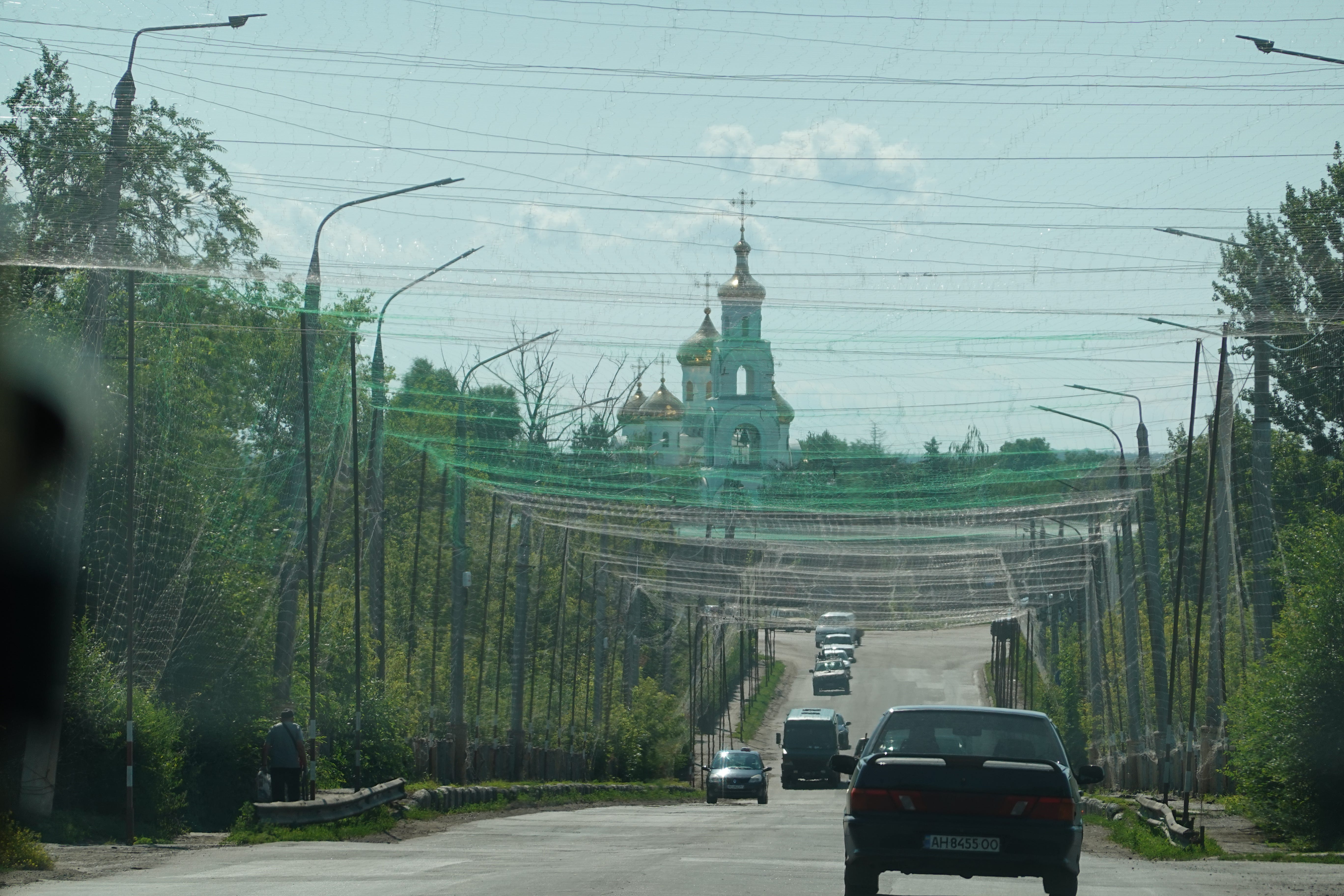
KYIV—Earlier this month, I spent a few days in the last two Ukrainian-held cities of Donbas. Driving on streets covered with anti-drone nets and along avenues lined with barbed wire, sometimes anxiously checking a drone detector able to broadcast a UAV’s video feed, I saw Kramatorsk and Sloviansk entering the last stage of this gradual process that turns a place of life and community into a battlefield.
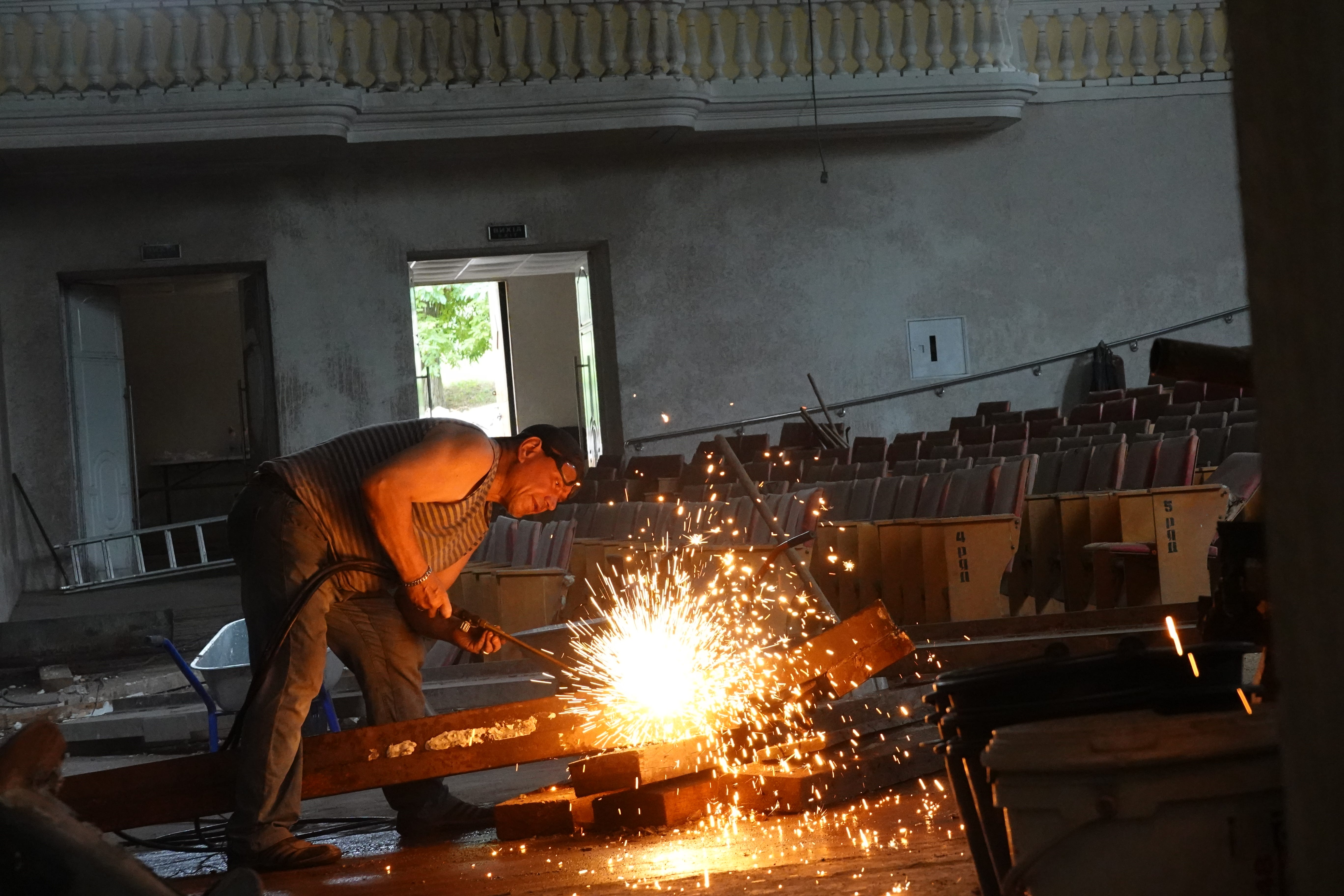
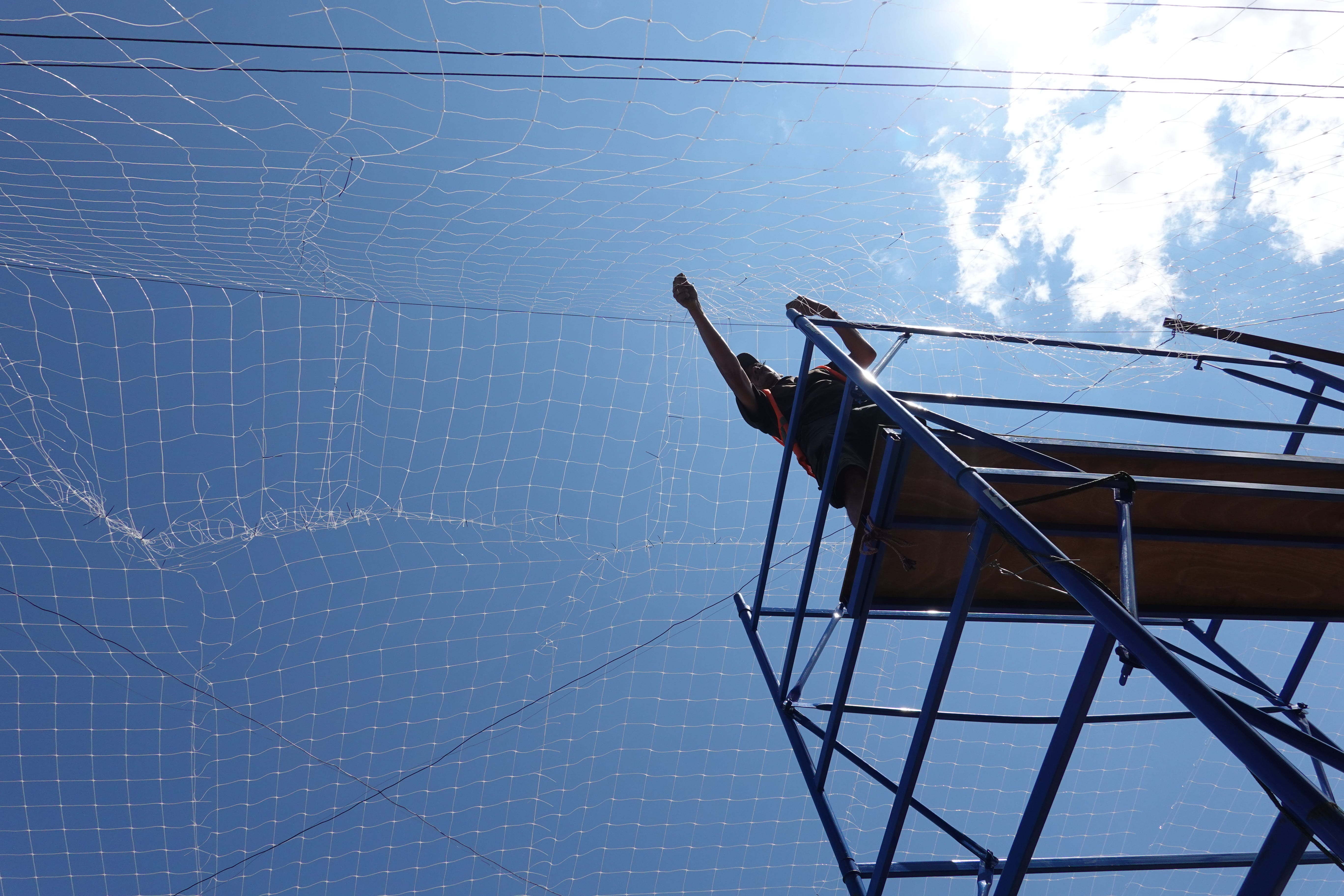
Kramatorsk and Sloviansk are alive, in a distorted, battered but very real sort of way. Not counting the soldiers who populate what have been garrison cities since 2022, around 90,000 people still live there. They are drinking coffee on the terrace of a café, waiting in line at the post office or grabbing groceries at the supermarket, passing by municipal workers cutting the grass around the poles of the anti-drone nets. One shoemaker working a stone’s throw from the deserted train station counted his blessings: he had an intact flat, gas, electricity, and few expenses besides food. If gas had been cut immediately at the beginning of the invasion, he probably would have left, he said. But he had long grown accustomed and would stay as long as he had that trinity: an intact flat, gas and electricity.
That process through which the Russian army kills a city is familiar by now, dozens of Ukrainian towns and cities having already gone through it. It is a gradual suffocation, slow and, because the Russian offensive never truly stopped, seemingly inexorable. It’s not linear, however: late last year, I visited a town in the Zaporizhzhia region that, up to that point, had been almost entirely untouched by war — the first Russian long-range drone had only hit the town a week before my arrival in October. Given the pace of the Russian advance at the time however, I fully expected that, by the next summer, Novomykolaivka would be only a handful of kilometers from the frontline and fully ravaged. Instead, the Russian offensive stalled and the city remains some 20 kilometers from the frontline (same as when I last came there in December), hit by long-range drones and gliding bombs every week but still, somehow, teetering on the edge between city and battlefield.
According to the Ukrainian war monitoring project DeepState, Russian forces are now fighting some 13 kilometers away from the eastern outskirts of Kramatorsk and a similar distance from Sloviansk (both cities stand just 5 kilometers away from each other across a hill).
There was a time when the line that separated city from battlefield was a bit more clearly defined: back in 2022 and 2023, civilian evacuation groups (and the journalists that tagged along) could drive within a kilometer or two of Russian positions to pull out residents. That was before drones began to dominate the battlefield and the notion of “kill zone” entered common parlance.
It is nowadays such an incremental process that it’s become nearly impossible to say when exactly a city stops being a city. It is, again, not linear, and by all accounts the pace at which life in Kramatorsk and Sloviansk is getting worse has accelerated in the past few weeks. But there is a litany of signs, some obvious and some more subtle, that can be used to make the chronicle of this slow agony: in Kramatorsk, one could start in November last year, with the closure of the local train station that marked the severance of the last railway link between Ukrainian-held Donbas and the rest of Ukraine. At around the same time, the first Russian FPV drones began roaming the city. I’ve already mentioned the anti-drones nets that began to be set up en masse this spring, inside the city and over the roads leading in and out. I don’t know when the city’s firefighting trucks began wearing those Mad Max-esque suits of armour, metal cages and skirts of thick rubber padding to protect their flanks. But they also point at a city becoming “unsuitable for life” — an expression often used in Ukrainian or Russian that makes those frontline spaces sound like distant, hostile planets.
The last maternity hospital in Donbas closed last month in Sloviansk, as local authorities began expanding the list of streets subjected to the mandatory evacuation of children. Discreetly, military headquarters left the city as stabilization points — small field hospitals usually found in villages across the frontline — moved in. An NGO specialized in evacuations of civilians started to move people out from Kramatorsk and Sloviansk itself, after years during which the cities had been places of refuge for Donbas resident fleeing the Russian advance. Local authorities decided this month to stop trash collection in some of Kramatorsk’s southern and eastern districts, the most exposed to drone strikes. Russian FPV drones went from an exceptional presence late last year to a daily threat in recent weeks.
There are other markers of impending doom that Kramatorsk and Sloviansk haven’t yet gone through: the closure of cities’ last Nova Poshta post offices, the general call for civilians to evacuate or the enforcement of a stringent, 3pm-to-11am curfew signaling the battlefield has finally taken over.
I don’t think you can really see a city die. There’s already destruction in Kramatorsk, supermarkets and apartment buildings gutted by gliding bombs and carcasses of vehicles hit by drones. But it’s not yet overwhelming and it is still happening side by side with this approximation of normal life. Nor is it being ignored yet: blown-out windows are still covered with cardboard or even replaced, firefighters still make the dangerous trip every time a gliding bomb leaves a crater in a residential area.
By the time destruction dominates the landscape, the city has already been dead for a while.
Rather than in the visual signs, then, it’s in the conversations that I could feel the agony of Kramatorsk and Sloviansk most intensely. It’s where the absences become obvious: an official from the emergency service who sent his 17-year-old son to Dnipro two weeks ago as things took a turn for the worse, a local businessman who prepares to join his wife and 7-year-old daughter in Lviv. Another man just lost his job after one of the very last working factories of Kramatorsk finally closed its doors, but fears being forcibly mobilized if he tries to join his wife in Uzhhorod.
It’s also clear in those conversations that many of these people, who have been living with the war for more than four years now and who have gotten used to it even as it came closer, have now started thinking about the end. They have largely stopped making plans beyond the immediate, living day by day until one day, something — a drone or a bomb hitting just a bit too close, the electricity being cut off, a lifelong friend who decides to leave — overcomes the fear of exile and pushes them to leave. Many older men and women, families with no resources, people who already fled once and then came back, decided they would stay no matter what.
I’ve mentioned the shoemaker who had already vowed to stay as long as he had a flat, gas and electricity. The local businessman has emptied his flat — 4 round trips in a minivan over the past couple of weeks — and has already decided he will stay until a long curfew forces him to shut down his cafés.
Near the Kramatorsk train station, a pastor talked about his experience of the past few months: a church hit by a gliding bomb exploding nearby, the evacuation minivan of his congregation also damaged by a drone, the people walking all the way from Druzhkivka to evade the Russian drones, the women from the choir who had finally decided to leave, the air battles between Russian long-range drones and Ukrainian interceptors, how missile strikes had become less common in the past few months, seemingly replaced by gliding bombs and drones…
He had driven to a car repair shop a few days ago and had seen two burned-out cars on the way, wrestled with the fact that some people stayed specifically because the pastor stayed — should he then leave to encourage people to do the same?
“Kramatorsk will hold,” he said. “As long as we’re here as a church, people will stay around us. The entire service sector is still working. My car mechanic is staying here. And all of this allows the soldiers to hold their ground here. They can get dental care, go to the store, or get their cars repaired.” I was struck to hear this after he had laid out with impressive clarity of thought just how bad things were getting. He didn’t really harbor any illusions, but when I asked him a bit later if he still held hope that all of this could stop, that Kramatorsk could avoid meeting the fate of so many other Ukrainian cities, he laughed and said yes. “Yes,” he said again. “I’m not thinking rationally. Rationality tells you that, of course, Kramatorsk will fall in a year, a year and a half perhaps. But I have hope.”
Thanks for this excellent article, it captures the dire atmosphere rather well.
Just returned from another three-week UA trip, also to those regions that only a year ago felt by and large safe and sound. There is just too much Lviv- and Kyiv-bubble reporting in the West. Izyum? Sviatohirsk? Kramatorsk? Komyshuvakha? Nikopol? Kherson? They all seem to hardly exist anymore, which makes me angry and sad.
Such a moving story...