
The Long War #56
A train to Zaporizhzhia, not losing the war of attrition, and a practical guide to fleeing the occupied territories

KYIV—It is now sunny and reasonably warm in the Ukrainian capital, warm enough to see some terraces populated again. Maybe it would be a stretch to call the mood upbeat, but it is a stark contrast from the literal and figurative darkness that was gripping Kyiv just a couple of weeks ago, when this newsletter’s previous issue was published.
There’s the obvious fact that Ukraine has made it through winter, avoiding a major energy collapse or humanitarian disaster despite months of Russian strikes and freezing temperatures that left hundreds of thousands of Ukrainians without heating. That would be enough for temporary relief.
But it’s not just that. Successful Ukrainian counterattacks in the Zaporizhzhia and Dnipropetrovsk regions, the claim that Russian forces are now losing more soldiers than they’re able to recruit, and the overall public-facing dynamism of the new defense minister Mykhailo Fedorov has also led to what Volodymyr Zelenskyy described as “new feeling”: “we feel the Russians’ weakness in some areas” he said during a press conference this week.
Even the first story I wanted to highlight in this issue strikes a positive note:
“Ukrainian Railways have resumed train service to Zaporizhzhia”
As with every other issue linked to the war, the good news is about the temporary absence of hardship: in frontline cities like Kharkiv, Kramatorsk and, for the past couple of weeks, Zaporizhzhia, Russian drone attacks on railway infrastructure have put an end to the train as a reliable, safe and cheap means of transportation. Trains departing from Zaporizhzhia have been regularly canceled in the past month, forcing passengers to take a bus to the city of Dnipro, an hour and a half away.
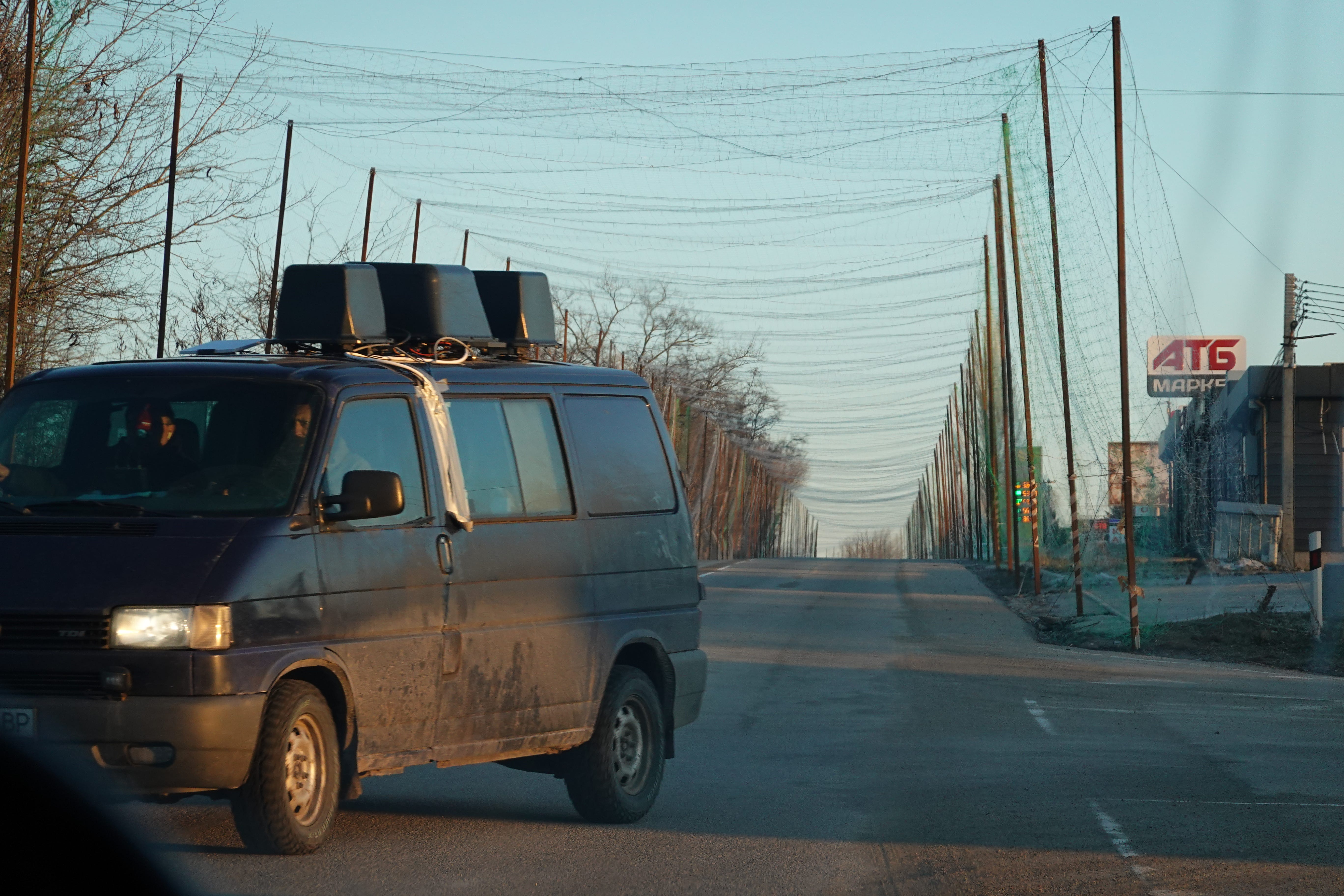
Since the beginning of February, local outlet “Zaporizhzhia Investigation Center” writes, “only one train, the number 38 to Kyiv, departed from the Zaporizhzhia-1 station, but even then not every day.” But for the past few days, regular traffic has resumed.
It’s a mundane piece, one that reflects a new reality of this war for millions of Ukrainians, as Russian forces look to isolate frontline regions. A new reality where buying a train ticket on the Ukrainian Railways app can now come with a warning to follow the conductor’s instructions in case of a drone attack, while covering “your head and neck with your hands, clothing, a blanket, a pillow, or other available items.”
Good news with caveats then, good news at the mercy of the next wave of Russian drones or missiles, but good news nonetheless. As I mentioned previously, optimism has even reached the military sphere, as Volodymyr Zelenskyy hailed the capture of some 400 km2 of territory (a disputed figure among watchers of the conflict) in the Zaporizhzhia and Dnipropetrovsk regions this past month.
This is where the second text that I wanted to include in this issue, published by Ukrainian outlet Texty, comes in:
“How Not to Lose the War of Attrition: 3 Blocks of Problems”
It’s a particularly interesting piece to me because it both highlights and clashes with the current mood.
The report really centers on this year’s main question: what is this war of attrition leading to? It’s a question that also underlines the current moment of (cautious) optimism: the hope is that Russia will keep losing more people than it can recruit, leading to the gradual exhaustion of its troops and, ultimately, of its offensive effort. The frontline would then freeze, making it possible for actual negotiations to begin. At this point, Ukraine would, arguably and at tremendous cost, have won the war of attrition.
Ukrainian outlet Texty identifies three “blocks of problems” it says Ukraine needs to solve in order for this to happen. There’s forces replenishment, which includes the need for a more effective mobilization and training system, the preservation of units’ experience, and the importance of brigade recovery away from the frontline (“the unit should get real time and space for a break — not a ‘second-line reserve’ where it can be thrown in at any moment to plug a hole, but a real withdrawal from the combat cycle”); organizational adaptability, with the example of the Russian drone unit ‘Rubikon’ and the question of who adapts faster (“the honest answer is complex and unpleasant. In certain narrow areas, particularly drone warfare, Russia has demonstrated the ability to adapt institutionally faster than Ukraine has been able to extend its own innovations to the army level”); and finally, the industrial base (“for Ukraine, a country with a limited industrial base, the key principles are decentralization, flexibility, and maintaining financial support from European partners”).
But as the headline makes it clear, Texty’s piece isn’t really aligned with the current optimism, discussing how to “not lose” rather than how to win. The sentence of the story really drives that point home: “we break down the war of attrition into its key components, and explain why the current course leads to defeat.”
The difference between the piece’s somber tone and the more defiant stance seen in official statements probably isn’t that hard to explain: it is natural to see a gap between, on one hand, a leadership keen to project an image of strength and a civilian population eager for good news and, on the other hand, a Ukrainian military community which has always emphasized a more “realistic” (read: pessimisstic) outlook and more radical solutions. And there’s the natural ebb and flow of gloom and optimism seen in any society engulfed in a never-ending war.
Still, the war continues, and with it, the occupation by Russia of huge parts of Ukraine’s land. The last story I wanted to put forward in this issue is about this:
“How Ukrainians can leave the occupation: current routes and travel conditions”
This piece by the local outlet Nyzhni Sirohozy.City (a small town in the now-occupied part of the Kherson region) is a thorough exploration of how Ukrainian can and do leave the occupied territories, meant both as a journalistic piece and an extremely practical, almost step-by-step guide on how to leave. It provides a glimpse of just how harrowing and stress-inducing these trips can be by listing the various routes available, along with prices, potential dangers and general tips.
One possibility is to travel to Belarus and cross into Ukraine from the humanitarian corridor set up there in the Volyn region, a route the story says is the “cheapest and relatively safest” to get back to Ukraine:
You have to walk from the Belarusian checkpoint “Mokrany” to the Ukrainian checkpoint “Domanove”. To the right and left are forests where land mines have been laid. In the middle is an asphalt road. Elderly people or people with disabilities who decide to go through this border crossing unaccompanied will have a hard time. The path along the neutral strip is a little more than a kilometer. Of course, no one will provide any escort.
If one chooses to go through Crimea, the outlet warns, filtration at the “Chongar” checkpoint will be the most difficult part of the journey, as the Russian FSB can interrogate people for hours and search phones and suitcases looking for any trace of support for Ukraine. “All subsequent filtrations are easier to go through”, according to the piece.