
The Long War #55
Dark Kyiv, Ukraine's regional shift, the Mariupol-Donetsk rivalry & more

KYIV—Hello everyone and welcome to this first 2026 issue of The Long War, written and published from freezing, dark Kyiv. It is the coldest winter of the war and, speaking personally, the coldest Ukrainian winter since I first settled in the country back in 2018.
Until maybe a week or two ago, there was still a tug-of-war in many people’s minds between the gloom of the current, harsh circumstances and the nostalgia-infused joy of a ‘real’ sunny winter, not seen for close to a decade. This is now largely gone I think, swept away by strikes that most recently knocked out light, heating and water to Kyiv’s entire left bank and several other parts of the city.
It is the fourth winter of the war, and that matters. Russia first tried to turn off the light across Ukraine back in the fall of 2022. Every winter since, Ukrainians have adapted, prepared themselves and learned how to cope with strikes that everyone now expected.
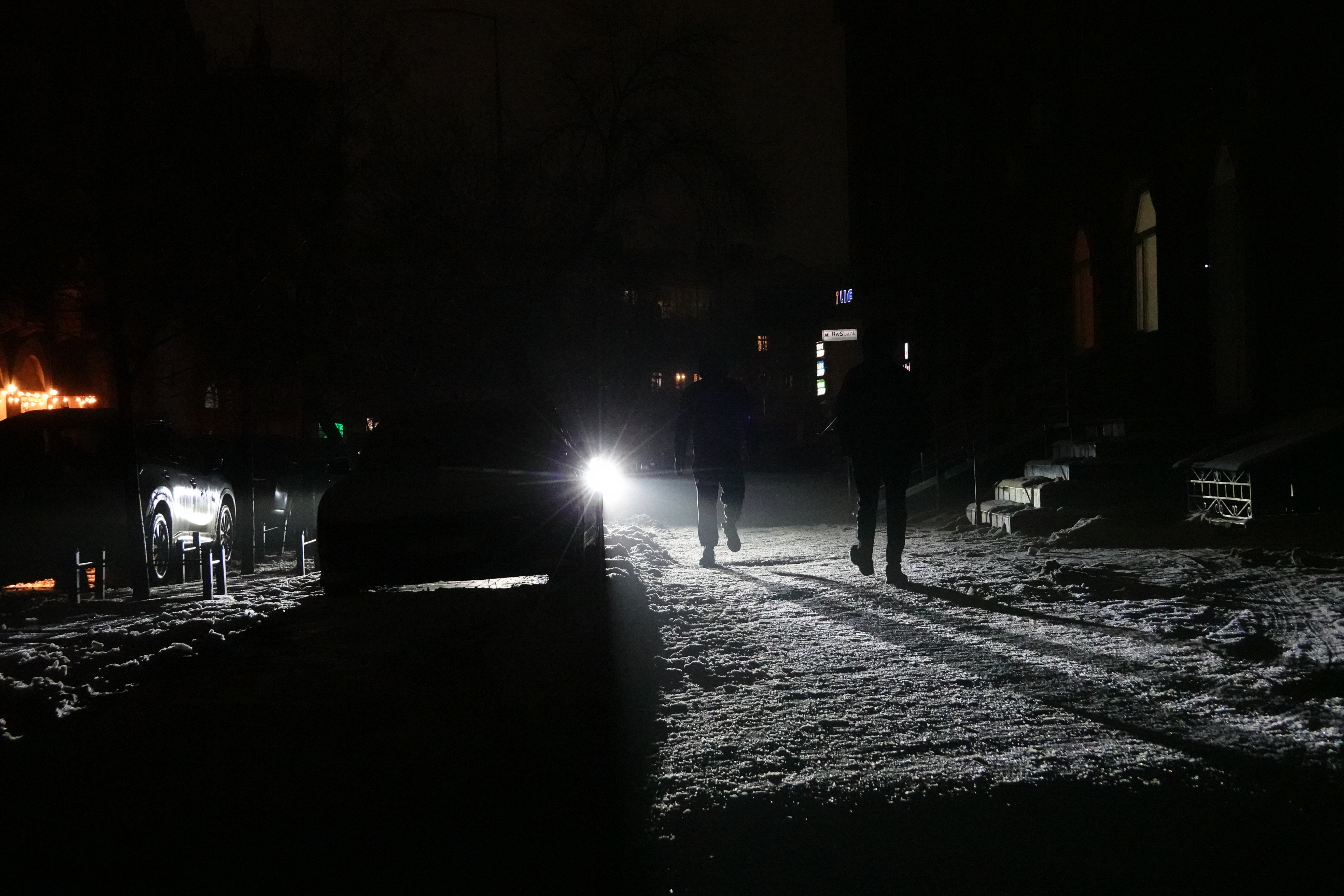
When the scheduled outages began this fall, there probably wasn’t a Ukrainian in the entire country who didn’t have some sort of contingency plan — maybe just a couple of power banks, a stack of candles and some batteries to power a frontal lamp, maybe a more elaborate set up with one or several Ecoflows, a portable gas stove and one of those fancy light bulbs that work normally when there’s electricity, but switches to an internal battery when power is cut off. Every shop, supermarket and office bought diesel generators that also range tremendously in size and power. Everyone had already been through it, and I think most people felt reasonably confident they would be fine.
I’m somewhat reluctant to frame this as yet another example of heroic Ukrainian resilience. Not because that resilience isn’t there — it is, made of ingenuity, solidarity and incalculable small-scale initiatives. But I’ve grown to fear that this framing has led to an exoticised depiction of Ukrainians as superhumans ready and able to endure anything, laughing and dancing in the face of adversity. The reality is that resilience is, more and more often, born out of necessity rather than defiance.
But it’s also that Ukrainians’ steady adaptation has been racing with the no less steady degradation of Ukraine’s energy infrastructure. As Ukrainians learned to cope with power cuts these past years, Russia kept hitting power plants and substations again and again, changing tack, going from bombing the entire country to focusing on a few select regions. Repairs were undertaken, but could never bring the system back to full capacity, and things got steadily worse. Years to adapt and prepare on one side, years to degrade and destroy on the other.
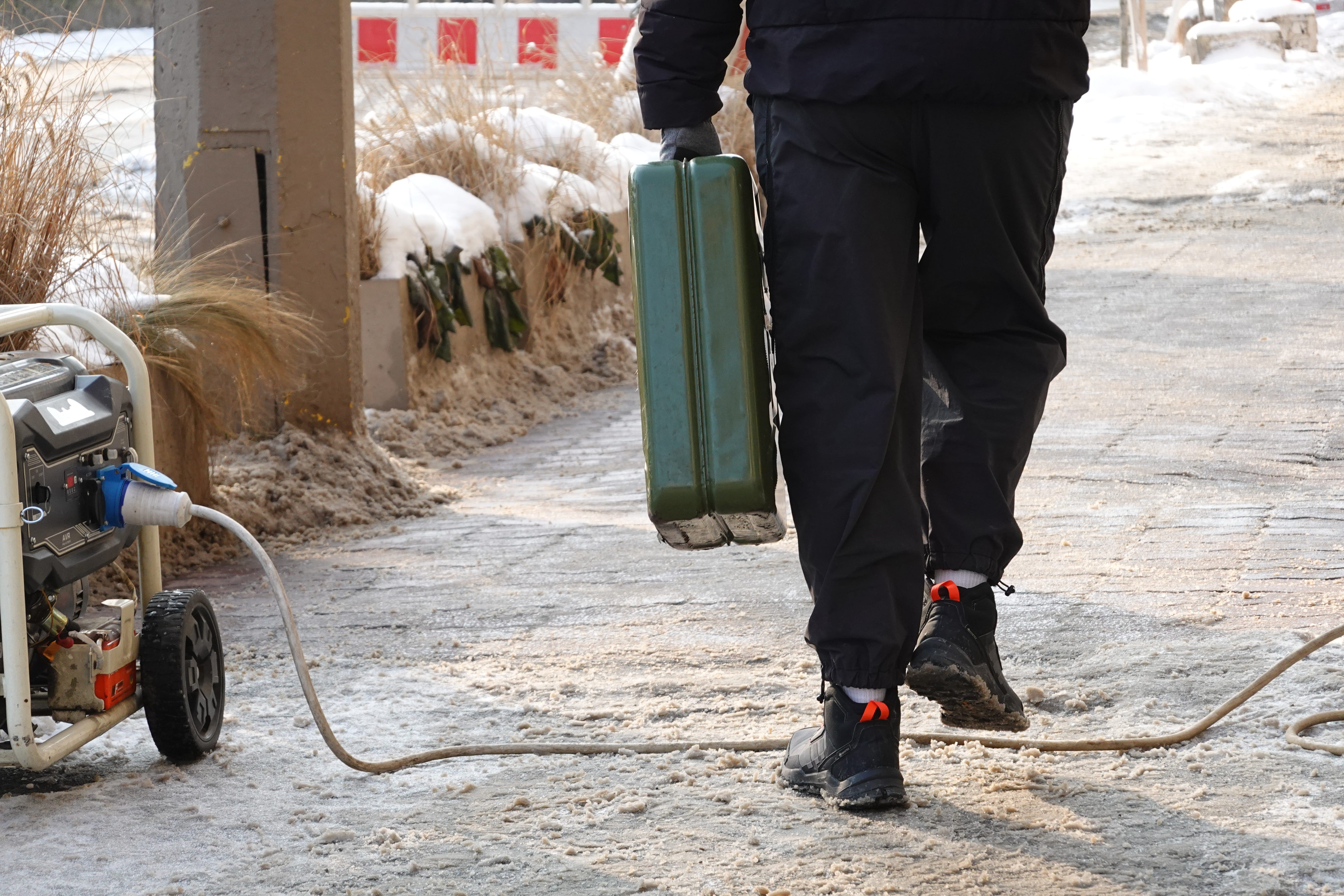
And yeah, things have been different this winter, different and worse. It was a curious thing to notice, in those first weeks of January. It started with scheduled power outages, inconvenient but also very familiar (they’ve been ongoing since the fall, not mentioning the years before) and fairly easy to accommodate: just check the planning and plan your life around it. Those scheduled outages stretched in duration until, one day, the light suddenly turned off in a café I was writing in. The café did have a generator, but weeks of constant use must have worn it down, or maybe it had run out of fuel, I’m not sure. The café emptied, and I ended up leaving too. Later, many shops and cafés started turning off most of their lights, trying to save some energy. Some shops began closing for a few hours.
The scheduled power cuts were then replaced by emergency, unplanned power cuts as Russian strikes intensified. It initially seemed like a temporary thing, and I kept refreshing the bot on my messaging app, hoping it would stop sending me the message “Увага! Наразі за вашою адресою застосовується екстрене відключення. Графіки стабілізаційних відключень не діють.” (“Attention! An emergency power cut is currently in effect at your address. The stabilisation power cut schedules are not in effect.”). Then I stopped checking as the random and near-constant power cuts became the new normal. I really can’t complain — I haven’t had any water or heating cuts, which is more than most people in Kyiv can say, and I don’t have to walk up the stairs to the 15th floor when the elevator isn’t working. My building didn’t freeze, and I’ve been fine sleeping with two additional blankets (central heating wasn’t cut, but it was lowered to the minimum).
Temperatures have been milder these past few days, and it looks like the worst of the winter may be behind Ukraine already, at least in terms of weather. Strikes are going to continue as Russia tries to complete the years-long campaign to collapse Ukraine’s energy system.
Something to read
Ekonomichna Pravda (in Ukrainian) | Where to Winter in Ukraine? | January 15
A telling headline as millions of Ukrainians wrestle with power cuts, with many looking for temporary accommodations in less afflicted regions. Most interesting in the piece is this breakdown of Ukrainian cities most affected by power cuts, as seen through the percentage of time spent without light between January 9 and 15 (things have gotten a lot worse since). The breakdown makes it clear that the Russian campaign is targeting the Ukrainian capital first and foremost:
Boryspil (Kyiv region) — 77%
Brovary (Kyiv region) — 63.7%
Kyiv — 46.2%
Kremenchuk (Poltava region) — 44.5%
Irpin (Kyiv region) — 42.7%
Petropavlivska Borshchahivka (Kyiv region) — 42.3%
Bucha (Kyiv region) — 41%
Vyshneve (Kyiv region) — 39.2%
Sofiivska Borshchahivka (Kyiv region) — 39.8%
Kriukivshchyna (Kyiv region) — 37%
Boiarka (Kyiv region) — 33.7%
Dnipro — 33.6%
NGL Media (in English & Ukrainian) | Hundreds of thousands, but not millions | January 16
This investigation by Lviv-based media NGL looks into the highly sensitive question of just how many men have left Ukraine since the beginning of the Russian invasion—until this summer, martial law prevented most men aged 18 to 60 from leaving the country. The article seems to have been triggered by a piece published in October by the Telegraph claiming that close to 100,000 Ukrainian men had left the country in just two months after Volodymyr Zelenskyy agreed to lift the ban for men aged 18 to 22. The real number, according to NGL’s estimates, is closer to 78,000.
NGL makes the conservative estimate that 540,000 men have left Ukraine since the invasion began, including at least 70,000 people who fled illegally. It’s a question that is much more difficult to answer than might appear at first glance, with countries often just counting crossings (and many people do leave, but then come back) and many not giving age and gender breakdowns.
The real figure is likely higher, NGL acknowledges—Eurostat says 1.1 million Ukrainian men received temporary protection between 2022 and 2024. But this is nevertheless a solid conservative estimate to build upon.
Carnegie Center | Ukraine’s Regional Shift: Realignments in Wartime and Beyond | December 17
This report does what few pieces of writing have attempted since the beginning of the Russian invasion: paint the early, broad strokes of what a future Ukraine may look like based on the trends already shaping the country. The portrait that is emerging is that of a shrinking country, increasingly centered on its Western regions, and in which the war has “fortified” national identity but weakened the country’s decentralization process.
Western and central regions, such as Ivano-Frankivsk and Cherkasy, are gradually emerging as new investment poles, while the war-affected southeast risks slipping into sustained economic marginalization. Unless actively addressed, this divergence could solidify into a durable postwar imbalance—one that shapes Ukraine’s economic geography for decades. (...) Western Ukraine continues to absorb the majority of IDPs. These regions now face a growing challenge: transitioning from a short-term humanitarian response to long-term integration strategies.
0629 (in Ukrainian & Russian) | Why people from Donetsk dislike those from Mariupol | November 2025
A fascinating history of the rivalry between Donetsk and Mariupol, the two centers of the Donetsk region, from the Russian empire to the 2022 invasion and Russian occupation. Below is a shortened, AI-translated (checked and edited by me) version of the piece:
Before the outbreak of World War I, the status of these two settlements was generally incomparable. Judge for yourself. The county town of Mariupol, with a population of almost 60 thousand, was the second busiest port in the southern Russian Empire, after Odessa. Two large metallurgical plants operated here. The city housed the consular offices of 7 European states: Greece, Italy, Austria-Hungary, Turkey, Belgium, Germany, and Great Britain. (...) The young Yuzivka (the future Donetsk), meanwhile, was founded only in 1869 (...) Only in May 1917 did the village receive the status of city. But even then, it did not look very good. The Russian writer Konstantin Paustovsky, who was unlucky enough to work at the local metallurgical plant in 1917, described Yuzivka as follows: “A messy and dirty village surrounded by shacks and dugouts.”
(...) In 1924, Yuzivka was renamed the city of Stalin [Stalino]. It is said that this laid the foundation for the city’s rapid growth, since a city bearing the name of the “father of nations” cannot just remain a backwater.
(...) Following the collapse of the Soviet Union and the creation of independent Ukraine, the conflict between Donetsk and Mariupol deepened. Donetsk crime groups tried to take full control of other cities in the region, including Mariupol, and acted primarily through business, bankrupting enterprises and buying them up for practically nothing.
(...) When the period of rampant crime was left behind, a period of economic and administrative pressure from Donetsk on Mariupol began. The city, which contributed up to 4% of Ukraine’s GDP, was a pauper against the backdrop of flourishing Donetsk. In Donetsk, new shopping centers and sports arenas were being built, roads were being repaired, parks were being developed, and new modern housing was being built. At this time, Mariupol had wage arrears, the city’s budget had a huge deficit, and the infrastructure remained Soviet.
(...) Oddly enough, after the (2022) occupation of Mariupol by Russian troops, the long-standing enmity between the two cities took a new turn. “After the Russians took control of the city, I decided to go to Donetsk to at least buy some kerosene - there was nothing in Mariupol except ruins, and I no longer had the strength to cook over fire. I went to my friend in Donetsk, whom I had not seen since the beginning of the Covid pandemic. Imagine my surprise when she refused to take me in and refused to help with the shopping. There was so much anger in her words that I was scared. She said that we, Mariupol residents, did nothing to deserve Russia investing so much money in us,” said Nataliya, a Mariupol resident who survived the blockade and remained in occupied Mariupol.
The thing was, after the “liberation” of the completely destroyed city, Russian propaganda began trumpeting that it would turn the port city of Mariupol into a picture of spectacular reconstruction. This propaganda turned out to be quite effective for the residents of Donetsk, which had been occupied nine years earlier.
(...) Thus, an anecdotal story about the “restoration” of one of the central streets of the mining city became illustrative. A year ago, the story goes, workers removed the paving slabs on Donetsk’s Ilyich avenue, where they were laid for the Euro 2012 football championship. Cheap, low-quality asphalt was laid crookedly instead of the slabs. According to Donetsk residents, this high-quality tile from Ukrainian times was taken to Mariupol, where it was used to pave sidewalks and squares, passing off Donetsk tiles as Russian aid. Of course, it is not known whether this tile actually “moved” to the port, and not somewhere in Taganrog or Rostov, but the story is quite telling.
Instead, in Mariupol, stories were told about how, from the completely bombed-out city, they began to transport to Donetsk the surviving unique medical equipment, the remains of municipal transport, etc. These mutual attacks and insults have intensified even more after the region’s water crisis worsened.
ICYMI
Stories from legacy Western media published these past few days
Financial Times / Russia, Ukraine and the race for Chinese drone components
The Wall Street Journal / Inside Ukraine’s Quest to Build a Missile to Strike Deep in Russian Territory
Politico Europe / My survival guide to the Kremlin’s winter of terror in Kyiv
The New York Times / At the Center of Trump’s Vision for Rebuilding Ukraine: BlackRock
Something to watch
It’s been curious to see World War 2 being used again and again as the default conflict to compare the current Russo-Ukrainian war to, even as World War 1 seems like a much better example for anyone in search of historical analogies.
This engaging lecture focuses on the months that led to the November 1918 armistice, explaining the complex factors that pushed the Germans to take the initiative and ask for an armistice — and the Allies to accept it, despite being on the path to total victory. This obviously isn’t to say that things might shape up in the same way today (they won’t), but there is some food for thought there.